
Back to School:
How UNICEF Helps Educate Children in Crisis Zones
Focuses on temporary schools, accelerated learning programs, and support for displaced children in flood- and conflict-affected areas.
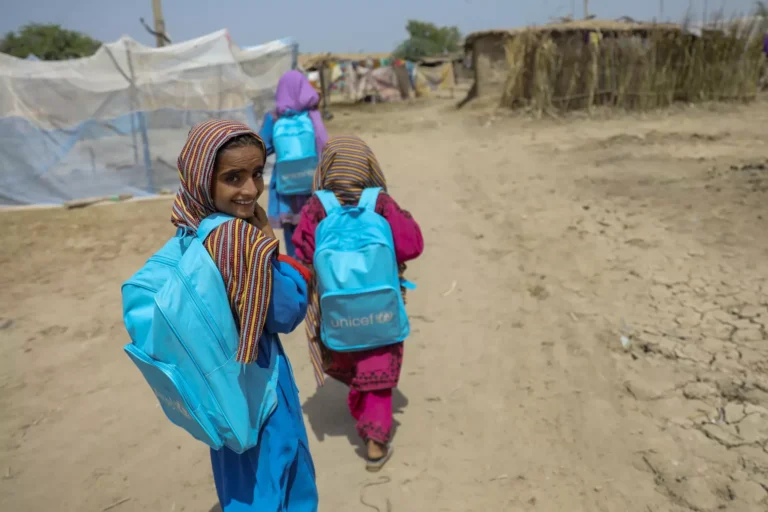
Back to School: How UNICEF Helps Educate Children in Crisis Zones
Introduction: Even in a Tent, a Child Can Dream
In disaster-hit areas of Pakistan, schools are often the first to close and the last to reopen. When floods wash away classrooms or conflict forces families to flee, education is interrupted — sometimes permanently.
But learning can’t wait. That’s why UNICEF works across Pakistan to make sure every child has access to education, even in the middle of a crisis — whether it’s by setting up temporary schools, training emergency teachers, or giving out school kits to children who have lost everything.
The Crisis: When Classrooms Collapse
Over the last decade, Pakistan has faced:
- Massive floods (2010, 2022) that damaged or destroyed thousands of schools
- Ongoing conflict and displacement in regions like ex-FATA, KP, and Balochistan
- Earthquakes that left rural schools in ruins
- COVID-19 school closures that affected over 30 million children
These emergencies don’t just disrupt lessons — they increase the risk of child labor, early marriage, and permanent dropouts, especially for girls.
UNICEF’s Emergency Education Response
UNICEF’s approach to education in emergencies is fast, flexible, and focused on rebuilding hope.
1. 🏕️ Temporary Learning Centers (TLCs)
In areas where schools are destroyed or unsafe, UNICEF helps set up TLCs — safe, tent-based classrooms equipped with:
- Teaching materials, blackboards, and furniture
- Learning kits for students
- Trained emergency teachers (often recruited from the local community)
- Child protection measures like gender-separate toilets and trained staff to prevent abuse
In the 2022 floods, UNICEF set up over 1,500 TLCs across Sindh and Balochistan.
2. 👩🏫 Teacher Training and Psychosocial Support
Emergencies are traumatic for children. Teachers play a key role in helping them recover.
UNICEF:
- Trains emergency education facilitators in psychosocial support
- Integrates life skills and emotional learning into temporary school programs
- Ensures that teachers are from the local area and culturally connected to their students
This helps children feel safe, supported, and emotionally ready to learn again.
3. 📚 Accelerated Learning and Curriculum Continuity
Many displaced or flood-affected children lose months or years of education.
UNICEF supports:
- Accelerated learning programs to help students catch up
- Flexible class schedules for children who also work or care for siblings
- Coordination with education departments to align temporary teaching with national curriculum
- Mobile classrooms and radio learning in areas without school buildings
4. 🎁 Learning Kits and School Supplies
A pencil can be powerful when everything else is gone.
UNICEF provides:
- School-in-a-box kits with notebooks, pencils, erasers, and learning games
- Back-to-school kits for children in shelters or camps
- Specialized kits for children with disabilities to ensure inclusion
This not only restores dignity — it helps children reconnect with normalcy.
5. 🧭 Long-Term Recovery and School Rebuilding
UNICEF doesn’t leave when the news cycle moves on. It works with government and local partners to:
- Rebuild disaster-resilient school buildings
- Advocate for child-friendly and gender-sensitive infrastructure
- Help return students from TLCs to formal schooling
- Push for education to be included in national disaster response plans
Focus on the Most Vulnerable
UNICEF ensures that education support reaches:
- Girls, especially in rural and conservative regions
- Displaced children and refugees, such as Afghan children living in camps
- Children with disabilities
- Children from flood-hit and low-income families
“In every emergency, the child who risks being left behind is a girl. We can’t let that happen.”
— UNICEF Education Officer, Sindh
Impact in Numbers (2010–2024)
- Over 2 million children reached through emergency education programs
- 4,000+ TLCs set up in disaster-hit areas
- 20,000+ teachers and facilitators trained in emergency response
- Education included in national disaster recovery planning with UNICEF support
Final Thoughts: Learning Is a Lifeline
A school may be just a tent. The classroom may be dusty. But for children in crisis, education is more than survival — it’s hope, healing, and the first step back to normal life.
Thanks to UNICEF’s continued work across Pakistan, millions of children are getting a second chance to learn — and to dream again.
“Disasters destroy buildings, not dreams.”
— UNICEF Pakistan